

1.Electromagnetic induction
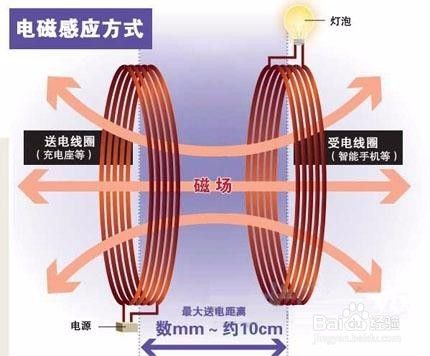
The charging base and the mobile phone terminal have built-in coils respectively. When the two are close, the transmitting coil generates a certain current in the mobile phone receiving coil through electromagnetic induction based on a certain frequency of alternating current, thereby transferring the point energy from the transmitting end to the receiving end, and then starting from The charging base supplies power to the mobile phone.
Because the principle is simple and easy to make, coupled with the promotion of Texas Instruments, Philips, Toshiba, Microsoft, Panasonic, Samsung, Sony, Qualcomm and other manufacturers, this is the most popular method on the market. However, wireless charging based on electromagnetic induction also has shortcomings, of which severely limited transmission distance is the most troublesome.
2.Magnetic resonance
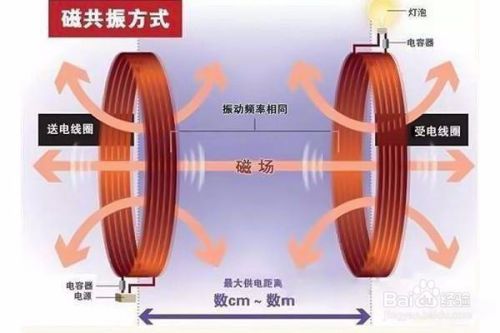
The magnetic oscillator is composed of a large inductance coil connected in parallel or in series with a small capacitor, and the same resonance frequency is a necessary condition for energy transfer. For example, two coils are used as resonators. The transmitting end vibrates at a frequency of 10MHz to radiate electromagnetic fields around, while the receiving end needs to vibrate at a frequency of 10MHz to receive the transferred energy.
Compared with electromagnetic induction, based on magnetic resonance, wireless charging achieves long transmission distance, efficient power supply, and is a one-to-many power supply mode. However, because both parties need to be at the same resonant frequency at the same time, circuit frequency modulation is very important, but this is not so easy.
3.Radio wave
The principle is to convert environmental electromagnetic waves into electric current and transmit electric current through the circuit.
This wireless charging method has a transmission distance of more than 10 meters, which is suitable for long-distance low-power charging, and can also be automatically charged anytime and anywhere. However, because of the lower conversion efficiency, if you use this method, the charging time will be longer.
---Above knowledge from the Baidu