

1. Significance The current cathode materials used as lithium-ion batteries mainly include: LiCoO2, LiMn2O4, LiNiO2 and LiFePO4. Among the metal elements that make up the battery cathode material, cobalt (Co) is the most expensive and has a small storage capacity. Nickel (Ni) and manganese (Mn) are cheaper, while iron (Fe) is the cheapest. The price of the cathode material is also consistent with the price of these metals. Therefore, the lithium ion battery made of LiFePO4 cathode material should be the cheapest. Another feature of it is that it does not pollute the environment.
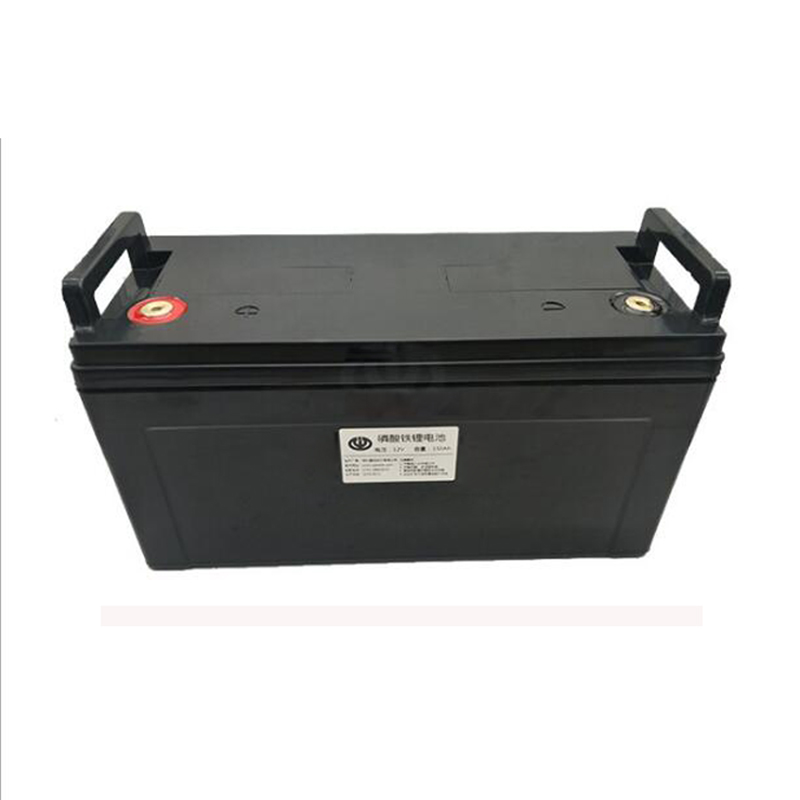
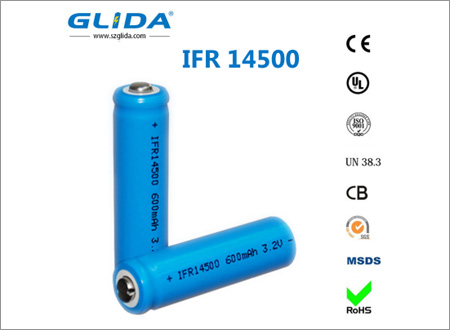
As a rechargeable battery, the requirements are: high capacity, high output voltage, good charge and discharge cycle performance, stable output voltage, high current charge and discharge, electrochemical stability, safety in use (not due to overcharge, overdischarge and short circuit Burning or explosion caused by improper operation), wide operating temperature range, non-toxic or less toxic, and non-polluting to the environment. The lithium iron phosphate battery using LiFePO4 as the positive electrode has good performance requirements, especially in the high discharge rate discharge (5~10C discharge), the discharge voltage is stable, safety (non-burning, non-explosive), and life (cycle times) ) It is the best in terms of pollution-free environment, and is currently the best high-current output power battery.
2. Structure and working principle The internal structure of LiFePO4 battery is shown in Figure 1. On the left is LiFePO4 with olivine structure as the positive electrode of the battery, which is connected with the positive electrode of the battery by aluminum foil, and the polymer separator in the middle separates the positive electrode from the negative electrode, but the lithium ion Li+ can pass through but the electron e- cannot pass. The negative electrode of the battery composed of carbon (graphite) is connected to the negative electrode of the battery by copper foil. Between the upper and lower ends of the battery is the electrolyte of the battery, and the battery is hermetically sealed by a metal casing.When charging a LiFePO4 battery, the lithium ion Li+ in the positive electrode migrates to the negative electrode through the polymer separator; during the discharge process, the lithium ion Li+ in the negative electrode migrates to the positive electrode through the separator. Lithium-ion batteries are named after lithium ions move back and forth during charging and discharging.
3. The main performance LiFePO4 battery has a nominal voltage of 3.2V, a final charging voltage of 3.6V, and a final discharge voltage of 2.0V. Due to the different quality and technology of the positive and negative materials and electrolyte materials used by various manufacturers, there will be some differences in their performance. For example, the battery capacity of the same model (standard battery in the same package) is quite different (10%-20%).The main performance of lithium iron phosphate power battery is listed in Table 1. In order to compare with other rechargeable batteries, the performance of other types of rechargeable batteries is also listed in the table. It should be noted that there are some differences in various performance parameters of lithium iron phosphate power batteries produced by different factories; in addition, there are some battery performances that are not listed, such as battery internal resistance, self-discharge rate, charge and discharge temperature, etc.There are big differences in the capacity of lithium iron phosphate power batteries, which can be divided into three categories: small-scale from a few tenths to a few milliamperes, medium-scale tens of milliamp-hours, and large-scale hundreds of milliamp-hours. Similar parameters of different types of batteries also have some differences. Here we will introduce the parameters of a small standard cylindrical packaged lithium iron phosphate power battery that is currently widely used. Its external dimensions: diameter 18mm, height 650mm (model 18650), its parameter performance is shown in Table 2.
4. Over-discharge to zero voltage test. STL18650 (1100mAh) lithium iron phosphate power battery is used for over-discharge to zero voltage test. Test conditions: Fully charge the 1100mAh STL18650 battery with a 0.5C charge rate, and then discharge the battery with a 1.0C discharge rate until the battery voltage is 0C. The batteries placed at 0V are divided into two groups: one group is stored for 7 days, the other group is stored for 30 days; after the storage expires, it is fully charged with a 0.5C charging rate, and then discharged with 1.0C. Finally, compare the difference between the two zero-voltage storage periods.The result of the test is that after 7 days of zero voltage storage, the battery has no leakage, good performance, and the capacity is 100%; after 30 days of storage, there is no leakage, good performance, and the capacity is 98%; the battery after 30 days of storage is subjected to 3 charge and discharge cycles. The capacity has returned to 100%.
This test shows that even if the battery is over-discharged (even to 0V) and stored for a certain period of time, the battery will not leak or be damaged. This is a characteristic that other types of lithium-ion batteries do not have.
5. Characteristics of lithium iron phosphate batteries Through the above introduction, LiFePO4 batteries can be summarized as follows.
High efficiency output: standard discharge is 2~5C, continuous high current discharge can reach 10C, instant pulse discharge (10S) can reach 20C;Good performance at high temperature: when the external temperature is 65℃, the internal temperature is as high as 95℃, and the temperature can reach 160℃ when the battery is discharged. The battery structure is safe and intact; Even if the battery is damaged internally or externally, the battery will not burn or explode and has the best safety; Excellent cycle life, after 500 cycles, its discharge capacity is still greater than 95%; There is no damage even after over-discharge to zero volts; can be charged quickly; low cost;No pollution to the environment.
6. Application of lithium iron phosphate power battery. Because lithium iron phosphate power battery has the above-mentioned characteristics, and produces various batteries with different capacities, it will soon be widely used. Its main application areas are:
Large electric vehicles: buses, electric vehicles, tourist attractions and hybrid vehicles, etc.;Light electric vehicles: electric bicycles, golf carts, small flat battery carts, forklifts, cleaning vehicles, electric wheelchairs, etc.;Power tools: electric drills, electric saws, lawn mowers, etc.;
Remote control cars, boats, airplanes and other toys;Energy storage equipment for solar and wind power generation;
UPS and emergency lights, warning lights and miner's lamps (the best safety); Replace the 3V disposable lithium battery and 9V nickel-cadmium or nickel-metal hydride rechargeable batteries in the camera (the same size);Small medical equipment and portable equipment, etc.
Here is an application example of replacing lead-acid batteries with lithium iron phosphate power batteries. Using 36V/10Ah (360Wh) lead-acid battery, its weight is 12kg, it can walk about 50km with one charge, the number of charge is about 100 times, and the use time is about 1 year. If a lithium iron phosphate power battery is used, the same 360Wh energy (12 10Ah batteries in series) is used, and its weight is about 4kg. It can walk about 80km per charge, charge up to 1,000 times, and have a service life of 3 to 5 years. Although the price of lithium iron phosphate power batteries is much higher than that of lead-acid batteries, the overall economic effect is better to use lithium iron phosphate power batteries, and they are lighter in use.